The answer is already on page 412 of a book no one has opened since 1974.So is the answer that contradicts it.
We do not resolve the disagreements of a century. We locate them — each position with the material it rests on and the page where it is stated.
有幾分證據,說幾分話
“Say only as much as your evidence allows.”
AI can now write advanced scientific prose faster than any advanced scholar can verify it. It is a new dimension of scientific research. The Humanities are the fields least equipped to adapt themselves to this new Reality: the disciplines that preserve languages, cultures, and the vast record of civilization itself, yet have no large labs, no compute grants, and corpora locked in scanned PDFs across non-Latin scripts.
PaRAGraph shows the way: an AI-augmented research instrument that treats a claim not as a generated assumption, but as a verified route to evidence, to the exact page of the source. We are using it to assemble something no single human career is long enough to build: a complete, evidence-anchored framework of a century of Chinese dialectology, scattered across mixed scripts, controversial approaches and vague taxonomies. Every step of the method is reproducible, while the research space is cross-domain. Where the sources disagree — and after a century of revisions they disagree constantly — the graph holds the disagreement open instead of dissolving it into a consensus that never existed.
We are two people — a linguist and an engineer. The method, the benchmark, and the ontology will all be public.
In any mature discipline, the questions worth asking have more than one answer in print.
Each of those answers is still defended somewhere, on material of its own. Summarised, they collapse into one confident paragraph that no scholar ever wrote. Held apart, they show the field as it stands. One question has divided Chinese dialectology for decades:
方言存稿 · p. 71
Language Atlas of China, Chinese Dialects Volume (2nd edition) · p. 12
Full documents are available to platform members only.
Wu, Min, Yue and Hakka as groups — 497 mutually supporting claims across 39 sources.
Whether Jin, Hui and Pinghua stand on their own — and whether the northern bloc is one thing at all.
No consensus is manufactured here. Locating the disagreement is the finding.
Two people, 6 months, and a discipline read page by page.
2026-09-23
The challenge is no longer discovery, but verification
Science is producing answers faster than it can check them.
The bottleneck of modern linguistics is not data availability, but reasoning capacity.
Verification Crisis
A single comparative study in Sinitic typology can require 3–6 months of manual source work. No existing tool can reliably extract structured, source-linked claims from full texts.
Linguistic Complexity
Sinitic linguistics involves underrepresented language families requiring specialized, non-anglocentric NLP approaches.
Fragmented Evidence
Validating a single typological claim requires synthesizing evidence scattered across decades of publications — often Chinese-only, mixed-script, with IPA, tables, and footnotes.
Key Research Questions
Our project moves beyond simple information retrieval to address fundamental questions in computational linguistics and knowledge representation.
Can LLMs serve as reliable analytical instruments for multilingual scholarly corpora under source-grounding constraints?
Evaluating whether models can extract structured claims while preserving explicit links to supporting source spans.
What verification protocols reduce unsupported claims to acceptable rates without collapsing useful recall?
Two-stage extraction and verification with measurable precision and recall baselines.
How does extraction fidelity scale across complex document layouts?
Handling tables, footnotes, mixed Chinese–Latin–IPA passages, and inconsistent terminology in older Sinitic literature.
Proposed Outcomes
We aim to deliver not just software, but a robust methodological framework for future research.
Novel Methodology
A validated methodology for source-grounded knowledge graph construction from academic corpora, with measurable precision and recall baselines for LLM-assisted claim extraction.
Benchmark Dataset
An expert-annotated evaluation set with metrics for source-span attribution accuracy and unsupported-claim rates across multilingual scientific texts.
Open Source Tooling
Evaluation framework and source-attribution scoring tools accessible to the wider Digital Humanities community.
One field first — because it is the hardest one we could have picked.
Built to travel
A century of Chinese dialectology gives us mixed scripts, shifting terminology and no agreed taxonomy. A method that holds here holds in anthropology, in the documentation of endangered and minority languages, in manuscript studies and the history of science — fields with the same problem and even fewer tools.
The method is the deliverable
The ontology, the extraction and verification protocol and the benchmark — including how often a claim turns out to be unsupported — are published, so another scholar can rerun the whole thing on a corpus of their own and disagree with us in public.
From reading to writing
What you find carries into the draft: a claim moves into the article with its citation attached, the bibliography assembles itself, and a reference that lost its source is flagged before a reviewer finds it.
Scholars who want their own corpus mapped this way, colleagues in NLP and knowledge graphs, and providers willing to back evaluation work — all of you end up in the same acknowledgements.
Roadmap & Publication Plan
Methodology Validation
Finalizing the ontology and claim extraction pipeline. Initial experiments on Sinitic corpora.
arXiv preprint, cs.DL (Oct 2026)Reproducibility & Data Release
Release of the Benchmark Dataset and evaluation metrics (Precision/Recall on extraction).
Cross-Domain Expansion
Applying the claim-centric graph model to adjacent fields (Archaeology, Anthropology).
Interdisciplinary Expertise
Combining deep domain knowledge in linguistics with advanced computational methods.
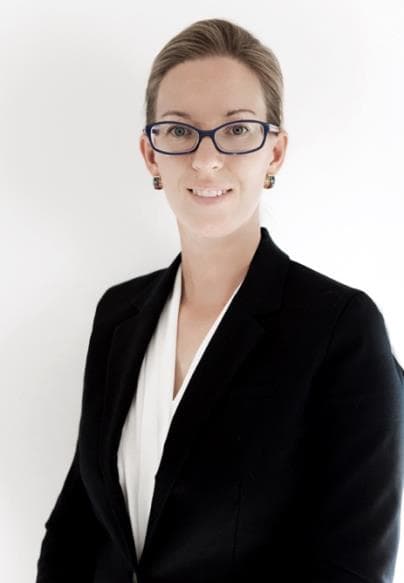
Ksenia Kozha
PhD in Chinese Linguistics. 20+ years in academia. Defines the project's scientific questions, ontology of linguistic features, evaluation criteria, and validation protocols.

Ilia Kozha
Designed and built the platform end to end — document processing, extraction workflows, graph construction, agentic RAG orchestration, and evidence-linked writing environment.
?
We're looking for like-minded collaborators in R&D and development. Linguistics, NLP, Knowledge Graphs — if this resonates, let's talk.
Current community links that strengthen PaRAGraph's research network.
- Oct 2026Preprint
Beyond source attribution: Address authorship and comparability decisions in an LLM-built scholarly knowledge graph
Ksenia Kozha · arXiv, cs.DL
Its companion, the PaRAGraph Casebook: four source-grounded cases in Yue dialectology, each finding with the slice of the knowledge graph behind it, recomputed in your browser. Code and data are open and archived on Zenodo.
- Jul 2026Network
Dr Ksenia Kozha has joined COST Action CA24121 KGELL
Dr Ksenia Kozha has joined COST Action CA24121 Knowledge Graphs in the Era of Large Language Models (KGELL) as a Working Group member.
WG2 · Domain-specific LLM tasksWG4 · MultilingualityWG6 · Evaluation frameworks
- May 2026Conference
Ilia Kozha attended The Knowledge Graph Conference 2026
KGC participation adds current industry and research context around enterprise knowledge graphs, ontology engineering, and LLM+KG systems.
Collaborate
PaRAGraph runs on frontier AI models, and every token is accountable: it ends as a claim node in a public graph or a data point in a public benchmark. We welcome research evaluation partnerships with model and infrastructure providers — supporters are permanently acknowledged in our public benchmark and methods paper.
We are seeking academic partnerships to validate this methodology across evidence-intensive humanities domains. Sinitic linguistics as a high-complexity validation domain — methodology designed to generalize.